

7 Financial Concepts for Starting a Business
7. Revenue Run Rate
Starting a business is exciting, but understanding the financial concepts for starting a business is just as important as having a great idea.
You have the idea. You have the logo. Maybe you already have your first customers.
But here’s the uncomfortable truth: revenue doesn’t automatically mean profit, and profit doesn’t mean healthy cash flow.
Before putting your money into a new venture, understanding the financial concepts for starting a business can help you make better decisions and avoid costly mistakes.
If you’re also thinking about building your business’s digital presence, see our Web Design, Graphic Design, Digital Marketing services.
Let’s talk about RRR
This is a simple way of estimating future revenue based on your current revenue performance.
For example:
Your business generates $5,000 in revenue this month.
If you maintained that exact monthly pace for 12 months:
$5,000 * 12 = $60,000
Your annual revenue run rate would be $60,00
Formula

For monthly revenue:
Monthly Revenue × 12
For example:
$8,000 × 12 = $96,000 annual run rate
But don’t get too excited yet.
Revenue run rate is an estimate, not guaranteed revenue.
If your business makes $8,000 during December because of Christmas sales, you shouldn’t automatically assume you’ll make $96,000 every year.
Seasonality, customer growth, economic conditions and other factors can dramatically change your actual revenue.
Use run rate as a planning tool, not a promise.
Another of the essential financial concepts every entrepreneur should know is the break-even point.
6. Break-Even Point
Here’s a question every entrepreneur should be able to answer:
“How much do I need to sell before I stop losing
money?”
That’s your break-even point.
At break-even:
Total Revenue = Total Costs
You aren’t making a profit.
You aren’t making a loss.
You’re simply covering your costs.
Break-Even Point Formula
For units:
Example
Imagine you sell T-shirts.
Your monthly fixed costs are $1,000.
You sell each T-shirt for $20.
The variable cost of producing each shirt is $10.
Contribution per shirt:
$20 − $10 = $10
Break-even point:
$1,000 / $10 = 100 shirts
You need to sell 100 shirts per month just to break even.
Your 101st shirt starts contributing toward profit.
Why this matters
Before starting a business, calculate your break-even point.
If your business needs to sell 5,000 products every month just to survive, but your realistic market can only support 500 sales, that’s something you want to know before investing thousands of dollars.
5. EBITDA
The name sounds complicated:
Earnings Before Interest, Taxes, Depreciation and Amortization.
Or simply:
EBITDA
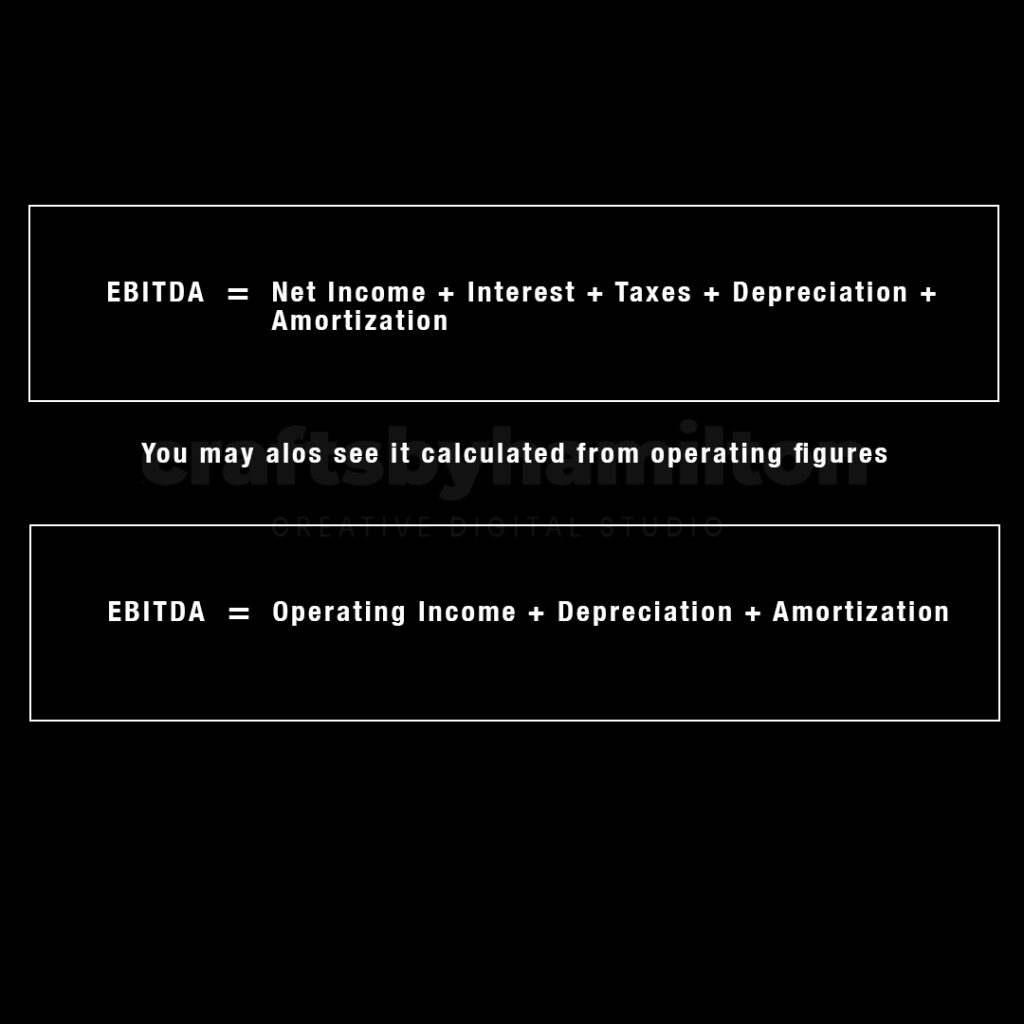
It is a way of looking at operating performance before these particular expenses are taken into account.
Basic Formula
Why should a small business owner care?
You don’t necessarily need EBITDA to run a small business day-to-day.
But understanding it becomes increasingly useful when you’re comparing businesses, looking at business performance, or preparing a company for investment or expansion.
For example, two businesses may have similar revenue but very different operating performance.
EBITDA can help provide another way of comparing their underlying operations.
Just remember: EBITDA is not the same as cash flow and should not be treated as actual cash in the bank.
4. Profit Margin
Revenue sounds impressive.
But revenue doesn’t tell you how much money you actually keep.
That’s where profit margins come in.
There are two important margins you should understand.
Gross Profit Margin
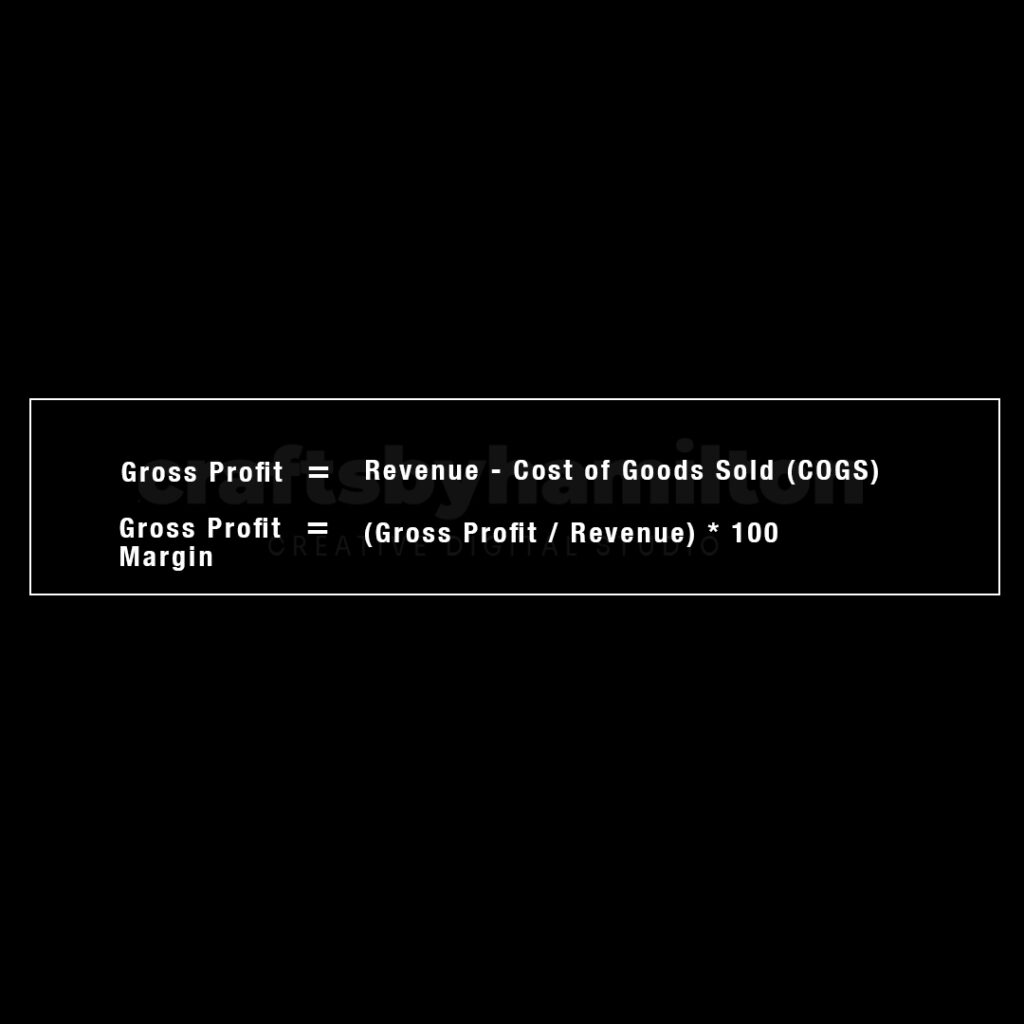
Gross profit is what remains after subtracting the direct cost of producing your product or service.
Formula
Example
You sell products worth $10,000.
Your cost of producing those products is $4,000.
Gross profit:
$10,000 − $4,000 = $6,000
Gross profit margin:
($6,000 ÷ $10,000) × 100 = 60%
Your gross profit margin is 60%.
Net Profit Margin
Now let’s go further.
Your business also has expenses such as:
- Rent
- Salaries
- Internet
- Software
- Marketing
- Electricity
- Transport
- Bank fees
- Insurance
- Other operating expenses
After all of these expenses, what is left?
That’s your net profit.
Formula
Net Profit Margin = (Net Profit ÷ Revenue) × 100
Suppose your business makes:
$10,000 revenue
After all expenses, you have:
$2,000 net profit
Your net profit margin is:
($2,000 ÷ $10,000) × 100 = 20%
You keep 20 cents from every $1 of revenue as net profit.
That’s much more useful than simply saying:
“My business made $10,000 this month.”
3. Working Capital
A business can be profitable on paper and still struggle to pay its bills.
Why?
Cash flow.
Working capital helps you understand whether your business has enough short-term resources to cover its short-term obligations.
Net Working Capital Formula

For example:
Your business has:
- $10,000 in cash and other current assets
- $6,000 in short-term liabilities
Your net working capital is:
$10,000 − $6,000 = $4,000
You have $4,000 of positive working capital.
Working Capital Ratio
You can also calculate the current ratio:
Working Capital Ratio = Current Assets ÷ Current Liabilities
Using the same example:
$10,000 ÷ $6,000 = 1.67
Your ratio is 1.67:1.
Generally, a ratio above 1 means your current assets exceed your current liabilities. But the “ideal” ratio depends heavily on the industry and business model.
Why this matters
Imagine you run a restaurant.
You have plenty of sales coming in—but your customers pay later while your suppliers need to be paid today.
You can be profitable and still run out of cash.
That’s why entrepreneurs need to understand the difference between:
Profit ≠ Cash
2. Return on Advertising Spend (ROAS)
If you advertise your business on Facebook, Instagram, Google or another platform, you need to know whether your advertising is actually working.
That’s where ROAS comes in.
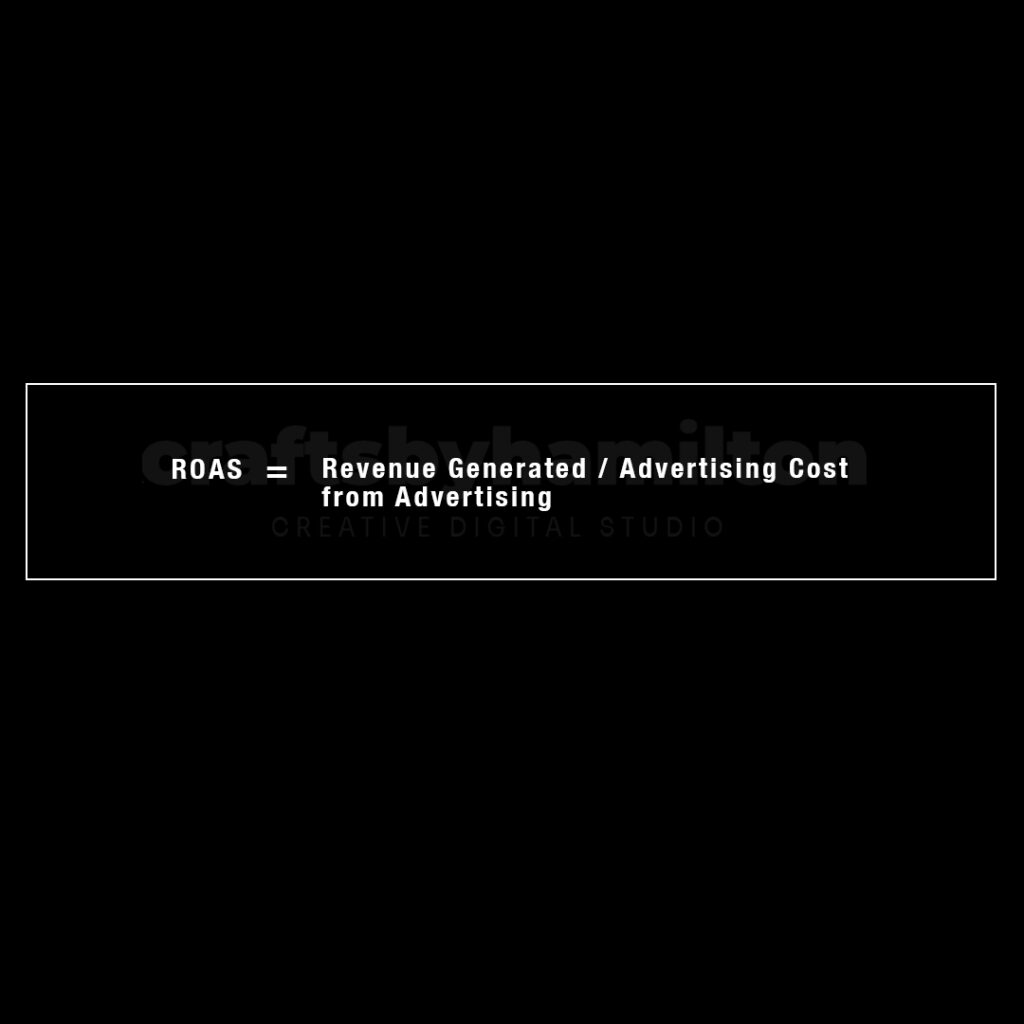
For example:
You spend $200 on advertising.
Those advertisements generate $1,000 in sales.
Your ROAS is:
$1,000 ÷ $200 = 5
Your ROAS is 5:1.
In other words:
For every $1 you spent on advertising, you generated $5 in revenue.
But here’s the catch…
ROAS is not profit.
If you generate $1,000 in revenue but spend $700 producing and delivering those products, your $200 advertising cost doesn’t mean you made $800 profit.
You still have other costs.
That’s why you should never look at advertising revenue alone.
Look at the entire business equation.
Revenue − Cost of Goods − Advertising − Operating Expenses = Profit
1. Return on investment (ROI)
Let’s end with one of the most useful financial concepts every entrepreneur should know:
Return on Investment, commonly called ROI, tells you whether an investment was actually worth it.
In simple terms:
“For every dollar I invested, how much did I get back?”
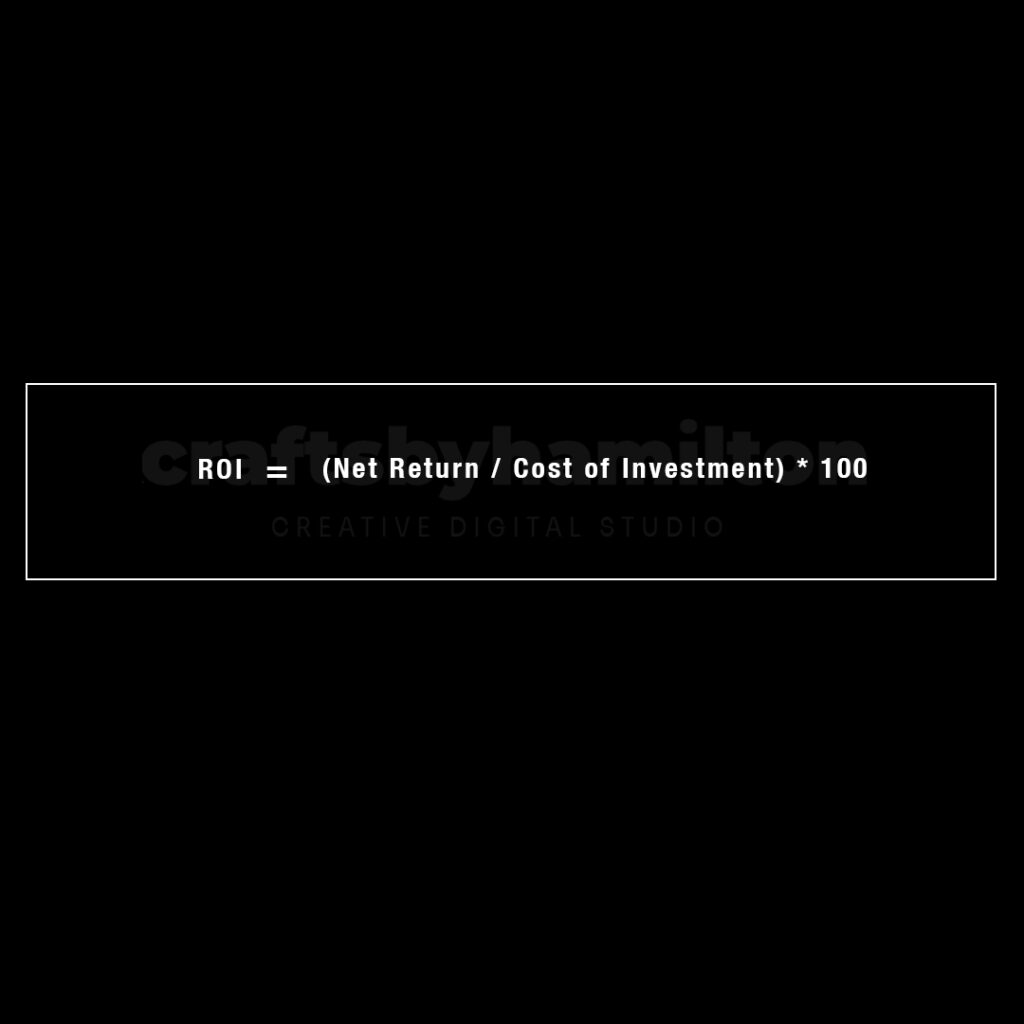
ROI Formula
For example, imagine you spend $500 on a new computer for your graphic design business.
Over time, that computer helps you generate $800 in profit.
Your return is:
$800 − $500 = $300
Therefore:
ROI = ($300 ÷ $500) × 100 = 60%
Your ROI is 60%.
That means your investment generated a 60% return relative to what you invested.
Why ROI matters
Don’t buy something simply because it looks good for your business.
Ask:
“How will this investment make me money, save me money, or improve my business?”
A $2,000 camera might be an excellent investment for a photographer who is getting enough paid work to justify it.
But if you’re just starting and have no clients, that same $2,000 camera could simply become an expensive piece of equipment sitting on your shelf.
Buy for the business you have—and the business you can realistically support.
The Numbers You Should Know Before Starting
If you’re serious about starting a business, you should be able to answer these questions:
1. ROI
Is my investment actually worth it?
2. ROAS
Are my advertisements generating enough revenue to justify what I’m spending?
3. Working Capital
Can my business cover its short-term obligations?
4. Profit Margin
How much of my revenue do I actually keep?
5. EBITDA
How is the underlying operation of my business performing before certain financing and accounting expenses?
6. Break-Even Point
How much do I need to sell before I stop losing money?
7. Revenue Run Rate
If I continue at my current pace, what could my annual revenue look like?
Don’t Fall in Love With Revenue
One of the biggest mistakes new entrepreneurs make is celebrating revenue without understanding profit.
Someone tells you:
“I made $50,000 this year!”
That sounds great.
But then you ask:
“How much did you keep?”
They say:
“$2,000.”
Suddenly, the story looks very different.
Revenue is important.
But profit, cash flow, margins and sustainability matter too.
Your goal shouldn’t simply be to build a business that makes money.
Your goal should be to build a business that makes enough money, keeps enough money, manages its cash properly and can continue operating when things don’t go according to plan.
Before You Start That Business…
You don’t need a business degree.
You don’t need to become an accountant.
But you do need to understand your numbers.
Because passion can start a business.
Marketing can attract customers.
A great product can create sales.
These financial concepts for starting a business give you a clearer picture of whether an idea is financially sustainable and where your money is going.
So before you register that company, print those business cards, rent that office or spend your savings on equipment…
Run the numbers first.
Your future self will thank you.
Save This Post
ROI → Is the investment worth it?
ROAS → Is my advertising working?
Working Capital → Can I cover my short-term obligations?
Profit Margin → How much am I actually keeping?
EBITDA → How is the underlying operation performing?
Break-Even → How much must I sell to survive?
Revenue Run Rate → Where could my revenue be heading?
Understand the numbers. Then build the business.
Ready to build a stronger digital presence? Work with CraftsbyHamilton.